
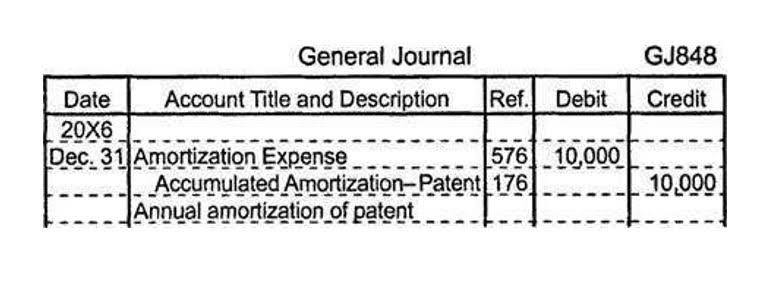
These entries are made at the end of an accounting period, typically quarterly or annually, to prepare the financial statements. adjusting entries examples By closing temporary accounts, the revenue and expense balances are reset to zero, ensuring a clean slate for the next accounting period. Using the calculated earned portion, accountants prepare an adjusting journal entry to transfer the amount from unearned revenue to revenue accounts.

Revenue Recognition
The balance sheet is also referred to as the Statement of Financial Position. Usually financial statements refer to the balance sheet, income statement, statement of comprehensive income, statement of cash flows, and statement of stockholders’ equity. Unearned Revenues is a liability account that reports the amounts received by a company but have not yet been earned by the company. Interest Payable is a liability account that reports the amount of interest the company owes as of the balance sheet date. Accountants realize that if a company has a balance in Notes Payable, the company should be reporting some amount in Interest Expense and in Interest Payable.
Step 4: Make Adjusting Journal Entries

These adjustments ensure our financial reports Online Accounting are true today and tomorrow. Adjusting entries directly affect the balance sheet and income statement. They are crucial for accurate depiction of assets, liabilities, and equity, as well as for ensuring that income and expenses are matched appropriately.
- The first is the accrual entry, which is used to record a revenue or expense that has not yet been recorded through a standard accounting transaction.
- The accounting period is the period of time for which financial statements are prepared, usually one year.
- For example, if a company has recognized revenue that has not yet been earned, an adjustment entry is made to remove this revenue from the income statement.
- When a specific account is identified as uncollectible, the Allowance for Doubtful Accounts should be debited and Accounts Receivable should be credited.
- One of the most common mistakes is making incorrect accounting entries.
Accrued Revenue
They can also handle complex calculations like depreciation and bad debt expenses. In accrual accounting, the timing of recording transactions is independent of cash https://urdu.motherland.com.pk/2020/04/01/robert-half-hiring-senior-accountant-in-chicago-il/ movements. Adjusting entries play a vital role in this process, ensuring that the financial statements accurately reflect the business’s economic activities.
- HighRadius is redefining treasury with AI-driven tools like LiveCube for predictive forecasting and no-code scenario building.
- It is a cornerstone of accrual accounting, which records financial transactions when they occur rather than when cash changes hands.
- Adjusting journal entries can affect various accounts on the balance sheet and income statement, including expense accounts, revenue accounts, asset accounts, liability accounts, and receivable accounts.
- Without these adjustments, businesses may report misleading profits, miscalculate taxes, and make poor financial decisions.
- This article delves into the world of adjusting entries, exploring their types, significance, and implementation within different accounting frameworks.
- Also referred to as a “p.o.” A multi-copy form prepared by the company that is ordering goods.
- GAAP allows estimates as long as they are reasonable and consistently updated.
Adjustment entries are essential in accounting to ensure the accuracy and integrity of financial statements. First, you need to know where adjusting entries occur, and that is in journal entries that record the cash flow of a company. And through bank account integration, when the client pays their receivables, the software automatically creates the necessary adjusting entry to update previously recorded accounts. The other deferral in accounting is the deferred revenue, which is an adjusting entry that converts liabilities to revenue. Accrued expenses are expenses made but that the business hasn’t paid for yet, such as salaries or interest expense.

An adjusting entry is an entry made to assign the right amount of revenue and expenses to each accounting period. It updates previously recorded journal entries so that the financial statements at the end of the year are accurate and up-to-date. Adjusting entries are made at the end of an accounting period to update account balances for accrued and deferred items, ensuring accurate financial statements. Adjusting entries may seem like a small part of accounting, but they have a significant impact on financial accuracy.

To record accrued revenue, an adjusting entry is made to increase the revenue account and increase the corresponding asset account. In the income statement, adjustment entries are used to update the values of revenue and expenses. For example, if a company has recognized revenue that has not yet been earned, an adjustment entry is made to remove this revenue from the income statement. Similarly, if a company has incurred an expense that has not yet been recognized, an adjustment entry is made to include this expense in the income statement. As you end the accounting period each month, you need to prepare an adjusting entry to transfer the expired portion of the prepaid insurance to an expense account.